Every Day is Earth Day is an annual event celebrating the people, organizations, and businesses that uphold our sustainable culture in Door County and beyond. On Sunday, April 21, from 1:00-4:00, Crossroads at Big Creek will host the third day of the four-day festival.
During the family-friendly event “Capturing the Energy of the Sun,” Crossroads and many of our partner organizations will offer tree planting, displays, demonstrations, films, kids’ activities, guided hikes, free tree seedlings, free native wildflower seeds, and educational materials, and if we are lucky, experience safe solar viewing and naturalist-led tours to see the annual sucker run.
So how does the Sun fit the 2024 Door County Every Day is Earth Day theme: “Energy-Making It and Saving It”?
One of the basic concepts of ecology is that (almost) “all energy begins with the Sun and passes through organisms within an ecosystem.”
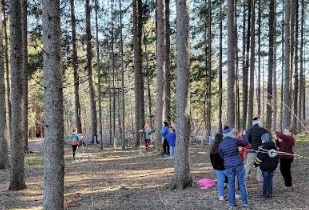
Take, for example, planting trees. Our partners from the Door County Climate Change Coalition, in collaboration with Crossroads Habitat Healers, will hold one of their Big Plants at the Crossroads event. Volunteers are invited to help plant native trees at Crossroads.
Most people realize that green leaves, through the seemingly miraculous process of photosynthesis, can capture the sun's energy, combine it with water and air, and convert it to sugar…food.
I thought I understood the food web---- that energy from the Sun is captured by plants, and then animals eat plants, and other animals eat them, so the energy is passed along. And in many cases, that is true. But it’s complicated.
Until I read Douglas Tallamy's book Bringing Nature Home: How You Can Sustain Wildlife with Native Plants, I did not realize that “insects are able to eat only vegetation from plants with which they share an evolutionary history." In other words, most native Wisconsin insects can eat only one or two species of native Wisconsin plants. All other plants are distasteful or even poisonous to them.
But consider that in our region, during breeding season, almost all of our songbirds feed themselves and their young with soft, juicy, nutritious caterpillars. Exclusively. And most moths and butterflies lay eggs only on native plants. But even locally native plants are not equally beneficial. Research by Dr. Tallamy and his team at the University of Delaware has determined that 14% of native plants support 90% of butterfly and moth species. And that matters. Without caterpillars, there can be no baby birds. And, actually, mammals and even fish also relish caterpillars this time of year.
It becomes even more complicated with bees. Most bees – native wild bees and domestic European honeybees – will visit a variety of flowers to gather nectar, but in order to raise their young, they require high-quality pollen, pollen containing four essential amino acids from which to make protein. According to horticulturist Jarrod Fowler, “15-60% of native bees are pollen specialists who collect pollen from only 40% of regionally native plants.”
Consequently, representatives from the Door County Master Gardeners and Wild Ones-Door Peninsula will have booths at which they can help visitors learn about host plants, pick up free wildflower seeds, and perhaps most importantly, learn which locally native trees will support the greatest number of butterflies, moths, and native bees.
Researchers are just beginning to understand how the Sun’s energy becomes food in the leaves, passes through tree trunks to their roots, and grows in association with fungi. The food from the trees supports vast networks of fungi, which in return help trees absorb water and nutrients and, unbelievably, enable trees to communicate with each other and share resources.
So much to learn! So many ways to learn. And thanks to the generosity of Crossroads donors and volunteers, and our partners in conservation, learners of all ages (please bring the kids!) can enjoy the Sunday afternoon event free of charge.
Other programs at Crossroads this week include a Door County Master Gardener Program on heirloom vegetables, our weekly family program, Saturday Science, will enable learners of all ages to “Meet the Squirrels” and the League of Women Voters will present a forum aptly named “The Big Stink-A Question of Manure.”
Thursday, April 18
6:30 pm DCMGA: Heirloom Biographies
Delve into the intricate histories of cherished heirloom plants with Janell Wehr. We’ll explore captivating stories, including AW Livingston, the father of the modern tomato, and Wisconsin’s own Beaver Dam peppers and Picha potatoes. We’ll unravel the unique narratives behind these beloved varieties and many more, each rooted in cultural and agricultural significance. The program culminates in an insightful understanding of terms heirloom, open-pollinated, hybrid, and GMO.
The lecture, which is free and open to the public, will be live streamed at Crossroads at Big Creek at 6:30 p.m. and also available for at-home viewing via Zoom. Those who prefer to watch at home can join the zoom meeting on the day of the event by clicking at https://www.dcmga.org/
The Wehr lecture is presented in collaboration with Crossroads at Big Creek and Door County Seed Library.
Saturday, April 20
2:00 pm Science Saturdays: Meet the Squirrels
Learners of all ages will learn about the bushy-tailed grey squirrels and red squirrels through a video, games and a hike to visit a red squirrel midden.
Science Saturdays is a free, family-friendly program geared toward elementary students but we welcome learners of all ages. Hopefully, part of this program will be outdoors. Please dress for the weather. No registration required. Free and open to the public. Meet at the Collins Learning Center, 2041 Michigan, Sturgeon Bay,
Sunday, April 21
1:00 pm - 4:00 pm
Every Day is Earth Day : Capturing the Energy of the Sun
A celebration of energy in nature featuring demonstrations, nature journaling walks, films, tree planting with The Big Plant, demonstrations, citizen science, and other family-fun activities. Free trees, free wildflowers seeds, conditions permitting, Safe Solar Viewing and Naturalist-led Sucker Run Tour. In the Collins Learning Center and grounds of Crossroads at Big Creek, 2041 Michigan, Sturgeon Bay.
1:00-4:00--Habitat Healers: Earth Day Plantings with The Big Plant
This week volunteers will be planting tree seedlings! Wear clothing and footgear that can get dirty and wet and bring a water bottle. Instruction, equipment, and gloves provided along with cookies and lemonade at the end! Meet at the Workshop, Crossroads at Big Creek, 2041 Michigan Street, Sturgeon Bay
Tuesday, April 23
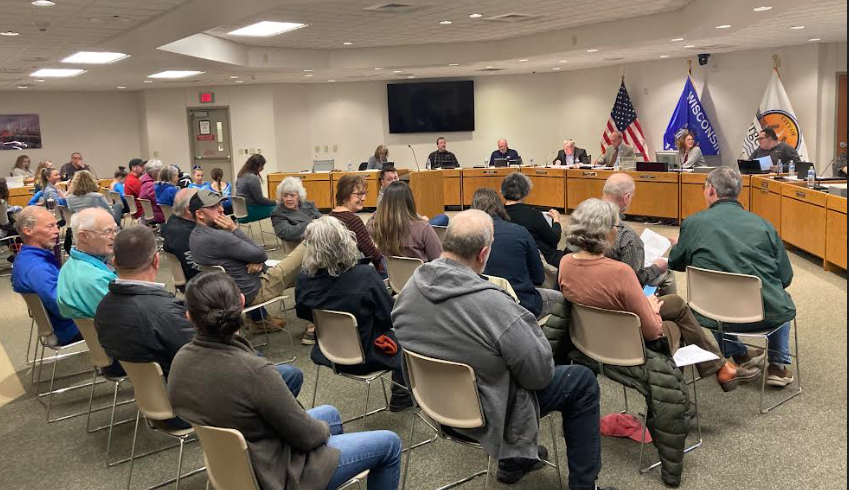
6:30 pm League of Women Voters Forum: The Big Stink – A Question of Manure
LWV: The Big Stink - A Question of Manure - Crossroads at Big Creek
The League of Women Voters invites you to a public forum surrounding the topic of manure. Manure management is a...
The League of Women Voters invites you to a public forum surrounding the topic of manure. Manure management is a complicated subject, especially given Door County’s Dairy fragile karst substrate and the importance of water health. We hope to make sense of the benefits and challenges of manure management through a presentation involving regulators, farmers and environmental experts.
Free and open to the public. Meet at the Collins Learning Center, 2041 Michigan, Sturgeon Bay.
Wednesday, April 24
10:00 Crossroads Book Club
This month we’re reading Rooted by Lyanda Lynn Haupt. Crossroads will have a few copies of the book available to borrow if needed. Whether you’ve read the book yet or not, we would love for you to join us as we explore the stories, ideas, and concepts shared within the pages of this awesome books! Gather around the fireplace at the Collins Learning Center, Crossroads at Big Creek, 2041 Michigan Sturgeon Bay.









.jpg)